

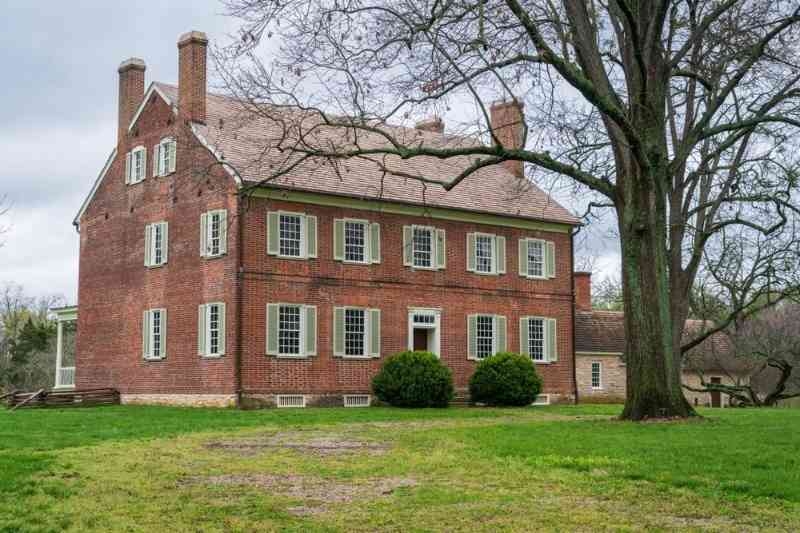
Old buildings do something new construction often cannot. They hold memory. Street identity. Craftsmanship. A sense of place that feels earned rather than assembled. That is why people keep fighting for them, even when the easier option would be demolition and a clean slate.
Still, preserving a historic building is rarely simple. It is expensive sometimes. Technical, definitely. And full of judgment calls. Should original windows be repaired or replicated? Can new systems be added without damaging historic character? How much change is too much? Real questions. Not always fun ones.
That is exactly why a guide like this matters. Historic preservation is not just about sentiment. It is about making smart choices that keep older buildings useful, safe, and recognizable without stripping away the qualities that made them matter in the first place.
In Kentucky, preservation work sits at the intersection of identity, economic reuse, and practical building stewardship. The Kentucky Heritage Council serves as the state historic preservation office, and the state’s current preservation plan for 2023 to 2027 specifically highlights sustainability as a priority in preservation efforts. Kentucky also continues to lean on financial tools such as rehabilitation tax credits, with the Heritage Council describing the state as a national leader in using those credits for eligible historic commercial and residential buildings.
That matters because historic preservation Kentucky is not just about saving one famous landmark here and there. It often means helping older downtown buildings, neighborhood structures, churches, theaters, and homes stay useful enough to survive. If a building cannot function, it usually struggles to last.
This is where good planning enters the picture. Preservation in Kentucky now increasingly overlaps with adaptive reuse, energy-minded upgrades, and public funding conversations, especially as grant programs like America250KY support the physical preservation of historic properties around the state.
People mix these terms up all the time, and fair enough, they sound close. But preservation, rehabilitation, restoration, and reconstruction are not interchangeable under federal guidance.
The National Park Service says the Secretary of the Interior’s Standards address four distinct treatments:
Preservation focuses on sustaining existing form, integrity, and materials. Rehabilitation allows repairs, alterations, and additions for a compatible use while preserving historic character. Restoration aims to depict a building as it appeared during a particular period of time. Reconstruction is the most limited approach and is used to recreate non-surviving resources with adequate documentation.
That distinction matters a lot when discussing building restoration techniques. A project that adds new uses and systems to an old warehouse may actually be rehabilitation, not pure restoration. And honestly, that is often the more realistic path.
One of the biggest trends in preservation right now is adaptive reuse. That is the practical move of taking an older building and giving it a viable new use without erasing its essential character. Think former schools turned into apartments, old commercial blocks turned into mixed-use spaces, or long-shuttered theaters brought back as event venues.
This trend keeps growing for a pretty obvious reason. Reuse gives buildings a chance to earn their keep. It also aligns with the sustainability goals Kentucky has been emphasizing in its statewide preservation planning. The National Park Service likewise notes that rehabilitation is the most commonly used treatment for the majority of historic buildings, partly because many can be adapted for new uses without seriously impacting historic character.
That is good news for heritage conservation, because preserved buildings usually survive longer when they remain active parts of daily life instead of frozen monuments with no workable future.
Every historic building is different, but some methods and habits show up again and again in successful work. The key is restraint. Preservation people say it in more formal language, but the basic idea is simple: do not over-fix what still works.
Useful building restoration techniques often include:
The NPS Standards for Rehabilitation say deteriorated historic features should be repaired rather than replaced whenever possible. If replacement is necessary, the new feature should match the old in design, color, texture, and other visual qualities, and where possible, materials.
The same standards explicitly warn against damaging chemical or physical treatments such as sandblasting and say cleaning should use the gentlest means possible. This is a huge one. Overcleaning can erase surface history fast.
Not every later change is a mistake. The NPS notes that changes that have acquired historic significance in their own right should be retained and preserved. That helps owners avoid the trap of chasing a fake “original” look that never really existed.
New additions or exterior changes should be differentiated from the old but still compatible in scale, massing, and character. That is one of the trickiest parts of restoring old buildings, because the new work has to fit without pretending to be historic.
A lot of preservation decisions are not just aesthetic. They are regulatory. In the U.S., historic work often intersects with federal standards, state review, local commissions, tax credit requirements, and National Register eligibility.
The NPS Standards for Rehabilitation are codified in 36 CFR Part 67 and serve as the criteria for certified rehabilitation projects under the federal historic preservation tax incentives program. The broader Standards for the Treatment of Historic Properties are codified in 36 CFR Part 68 and are widely used at federal, state, and local levels.
So when people talk about preservation laws USA, they are often really talking about a layered system:
That sounds like a lot because it is. Still, these layers often protect projects from bad decisions made too quickly.
Also Read: Best Places to Live in Kentucky 2025: Top 10 Towns & Cities
Preservation gets easier when owners can actually afford it. Kentucky’s rehabilitation tax credit program exists for that reason. The Kentucky Heritage Council describes historic rehabilitation tax credits as voluntary, dollar-for-dollar credits toward a property owner’s income taxes based on eligible rehabilitation costs and notes that both state and federal tax credit programs may apply depending on the building and project.
That is a big deal for historic preservation Kentucky because older buildings often come with structural surprises, material matching problems, and code upgrades that drive up costs. Tax credits do not make those challenges disappear, obviously, but they can make a serious project more feasible.
This is also one reason restoring old buildings now shows up in local economic development conversations, not just preservation circles. When a project pencils out, a block has a much better chance of coming back to life.
This shift is one of the most important trends right now. Preservation used to be framed mostly around aesthetics, history, and cultural value. Those still matter. A lot. But current practice increasingly links preservation with sustainability and resilience too.
Kentucky’s state preservation plan explicitly says the state can better prepare for the future by highlighting and strengthening sustainability in preservation efforts. The NPS also notes that choosing the right treatment involves regulatory issues and adaptations related to sustainability and natural hazards. The rehabilitation guidance even includes separate resources on sustainability and flood adaptation.
That means heritage conservation now often includes questions like:
That is not trendiness. That is just the field getting more realistic about how buildings survive.
A few mistakes come up again and again:
The National Park Service repeatedly emphasizes early planning and consulting preservation professionals before work begins. That advice sounds boring until a project goes sideways and everyone suddenly wishes they had followed it.
You May Also Like: Railroad History Kentucky Building With Growing Towns' Rise
The direction seems pretty clear. Preservation is becoming more integrated, not less. More tied to economic reuse, sustainability, code strategy, downtown reinvestment, and resilient design. In Kentucky, grants, tax credits, and statewide planning priorities all point that way.
So the future of building restoration techniques is probably not about turning every project into a museum piece. It is about making older buildings workable, durable, and legible as historic places. That last part matters. A building can be updated, occupied, and code-compliant without losing the story written into its materials.
And really, that is the heart of preservation. Not freezing time. Guiding change carefully enough that the past still reads clearly in the present.
Not at all. Many preservation programs focus on buildings that contribute to a district or reflect local architectural, social, or community history, even if they are not famous landmarks. A modest commercial block, neighborhood house, church, or industrial building may still have enough significance to qualify for review, listing, or incentives. Local context matters more than celebrity status.
Yes, sometimes they can, but the decision depends on visibility, compatibility, durability, and the building’s character-defining features. Some modern systems or materials may be acceptable when they solve performance or safety issues without damaging historic character. The key is not whether the material is old or new. It is whether the choice respects the building’s form, finish, and visual integrity.
Because they involve more unknowns than ordinary renovation work. Hidden damage, matching historic materials, permit review, code issues, tax-credit coordination, and careful design decisions all add time. Historic projects also tend to require more documentation before changes are approved. It can feel slow, sure, but that slower pace often prevents irreversible mistakes that would be much more costly later.
This content was created by AI