

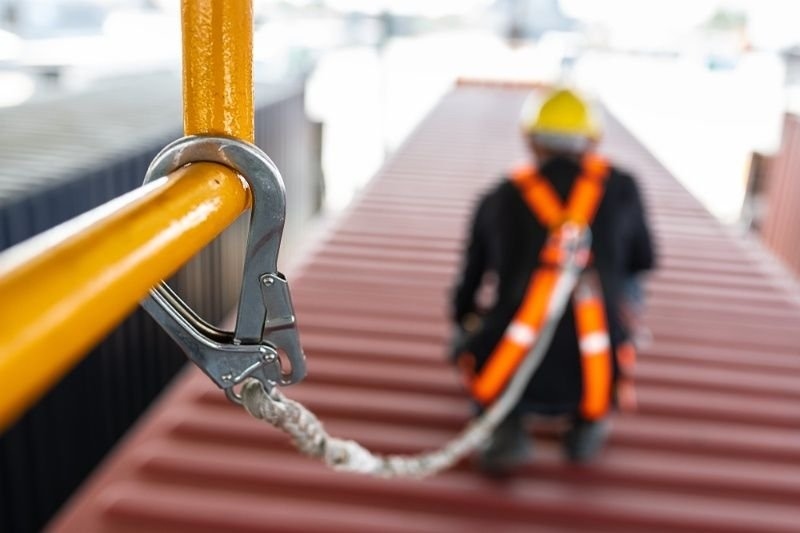
The truth is, working at heights can make an everyday task dangerous in no time. A loose board, a missing guardrail, a damaged harness, or a rushed choice—it only takes one slip. Fall protection isn’t just the gear you snap on when you’re a few feet up. It’s a whole system. Good planning, the right training, solid equipment, safe habits, and real supervision—these are what keep people safe.
Rules and fall protection requirements shift depending on your industry and the work you’re doing. There’s no one magic number for “safe height". In this blog, you’ll get real-world tips, a breakdown of OSHA’s main rules, a look at equipment choices, common hazards, and practical steps to help everyone get home safe.
So, what is fall protection? It refers to methods used to prevent workers from falling or reduce the consequences when a fall occurs. Depending on the task, this can include guardrails, safety nets, travel restraint, positioning systems, or personal fall arrest systems.
Good fall protection starts before a worker climbs. The hazard should be identified first, then controlled using the most suitable method.
A useful order is simple: eliminate the height hazard where possible, use passive protection such as guardrails, then consider personal systems where other controls cannot adequately protect the worker.
Don't Miss: Complete Building Inspection Checklist and Preparation Guide
Fall protection systems are not interchangeable. A guardrail prevents a worker from reaching an edge; a travel restraint system limits how far someone can move. A personal fall arrest system is designed to stop a fall after it begins.
That distinction matters. Using a harness does not automatically make unsafe work safe.
| System | Main Purpose | Typical Example |
|---|---|---|
| Guardrail | Prevent access to an edge | Roof perimeter |
| Travel restraint | Stop the worker reaching a fall hazard | Roof maintenance |
| Fall arrest | Stop an occurring fall | Tower or elevated work |
| Safety net | Catch a falling worker | Certain construction work |
The right choice depends on the work surface, hazard, movement required, anchorage, clearance, and applicable rules.
A roof edge, scaffold, ladder, floor opening, and elevated platform create different risks. A solution that works for one may be wrong for another.
Before selecting fall protection, consider where a worker can fall, what is below the worker, how far they could fall, and whether rescue is possible afterward. That last part gets overlooked.
Fall protection equipment can include full-body harnesses, lanyards, self-retracting lifelines, anchorages, connectors, guardrails, safety nets, and other components designed for a specific system.
Equipment should never be selected by appearance or price alone. Compatibility matters. So does the manufacturer's specification.
For personal systems, workers should understand the complete setup rather than treating the harness as the entire solution.
A harness may look fine from a distance and still have damaged webbing, stitching, buckles, or connectors. Lanyards and lifelines also require inspection for cuts, burns, deformation, corrosion, or other damage.
Workers should inspect their fall protection equipment before use and remove questionable equipment from service according to workplace procedures and manufacturer instructions.
Suggested Reading: Fire Safety Compliance for Multifamily Housing in Kentucky
Fall protection regulations vary by industry, task, location, and type of work. In the United States, OSHA construction rules under 29 CFR 1926 Subpart M address fall hazards, systems, and training. OSHA's general industry rules use different requirements under 29 CFR 1910.28.
This is why workers should not rely on a single internet rule or a remembered height limit. The applicable standard needs to be identified first.
The OSHA fall protection standard for construction generally requires protection at unprotected sides and edges 6 feet or more above a lower level, subject to specific provisions and exceptions. OSHA also addresses holes, excavations, roofing, leading edges, scaffolds, and other situations separately.
General industry is different. Under OSHA 1910.28, many walking-working surfaces with unprotected sides or edges 4 feet or more above a lower level require protection, with task-specific provisions and exceptions.
The question of at what height is fall protection required does not have one universal answer. For many construction situations covered by OSHA 1926.501, protection is generally required at 6 feet.
For many general industry walking-working surfaces under OSHA 1910.28, the threshold is generally 4 feet. Other hazards can trigger protection at different heights or under different conditions.
So never use the height alone as the entire safety check.
A worker can face a serious hazard even below a familiar threshold, especially around dangerous equipment, openings, or other unusual conditions. OSHA's general industry rules, for example, include protection requirements around dangerous equipment and holes that do not simply depend on one standard height.
The better question is: what can the worker fall into or onto, and what protection is required for that specific exposure?
OSHA fall protection guidelines should not sit in a safety folder nobody reads. Supervisors can turn them into short job checks before work starts.
A practical site review can ask:
That last question is important because fall arrest is not the same as fall prevention. A worker suspended after a fall may still need prompt rescue.
OSHA's construction training rule requires employers to train workers who may be exposed to fall hazards so they can recognise hazards and understand procedures used to minimise them. Retraining is required when workplace or equipment changes make previous training inadequate.
Training should therefore match the job.
A worker using a personal fall arrest system needs more than a generic safety video. They should understand the hazards, equipment, inspection process, limitations, and procedures relevant to the work.
Also Read: Compliance with Kentucky Noise Regulation in Construction
The strongest fall protection programmes are built into normal planning. Before work begins, identify access routes, edges, openings, surfaces, weather conditions, equipment needs, and rescue arrangements.
Workers should have a clear process for reporting damaged equipment, missing guardrails, unstable surfaces, or changing site conditions. A safety system fails when employees feel pressured to continue despite a known hazard.
Buying more gear doesn’t make your job site safer. What matters is using the right controls, checking and maintaining your equipment, giving people proper training, following fall protection rules that fit your job, and fixing unsafe spots before it’s too late.
Height isn’t the whole story. That safer workplace comes from people making smart decisions again and again, especially when the job feels routine. Fall protection shouldn’t be an afterthought—it should be how the work is done.
Cold weather can turn synthetic harnesses stiff and brittle, while too much sun makes the fibres weaker over time. Always check your equipment for signs of fading, brittleness, or damage.
Absolutely. Most harnesses certified by ANSI and OSHA have a max weight limit of 310 pounds (including you and your tools). Go over that, and the gear won’t protect you the way it should. In those cases, you need heavy-duty equipment made for more weight.
Wash your gear with warm water and a mild detergent, then hang it up somewhere out of direct sunlight to dry. Skip the harsh solvents and abrasive cleaners—they’ll break down the synthetic fibres and weaken the harness.
There’s no hard-and-fast expiration date, but most manufacturers say five years is the maximum, depending on use. If you notice serious wear, fraying, or the harness has already stopped a fall, take it out of service right away—don’t mess around.
If someone is hanging still in a harness, blood can pool in their legs, cutting off circulation to vital organs. That’s called suspension trauma, and it gets dangerous fast.
This content was created by AI